
Two Research Papers.
Two Historical Perspectives.
A pair of historical essays exploring the visual politics of eighteenth-century France and the fragile networks of knowledge that sustain civilisation.

Natural Simplicity and Royal Privilege in Marie Antoinette’s Pastoral Image
Fashion, femininity and royal authority—how an image of natural simplicity could also communicate social distinction.
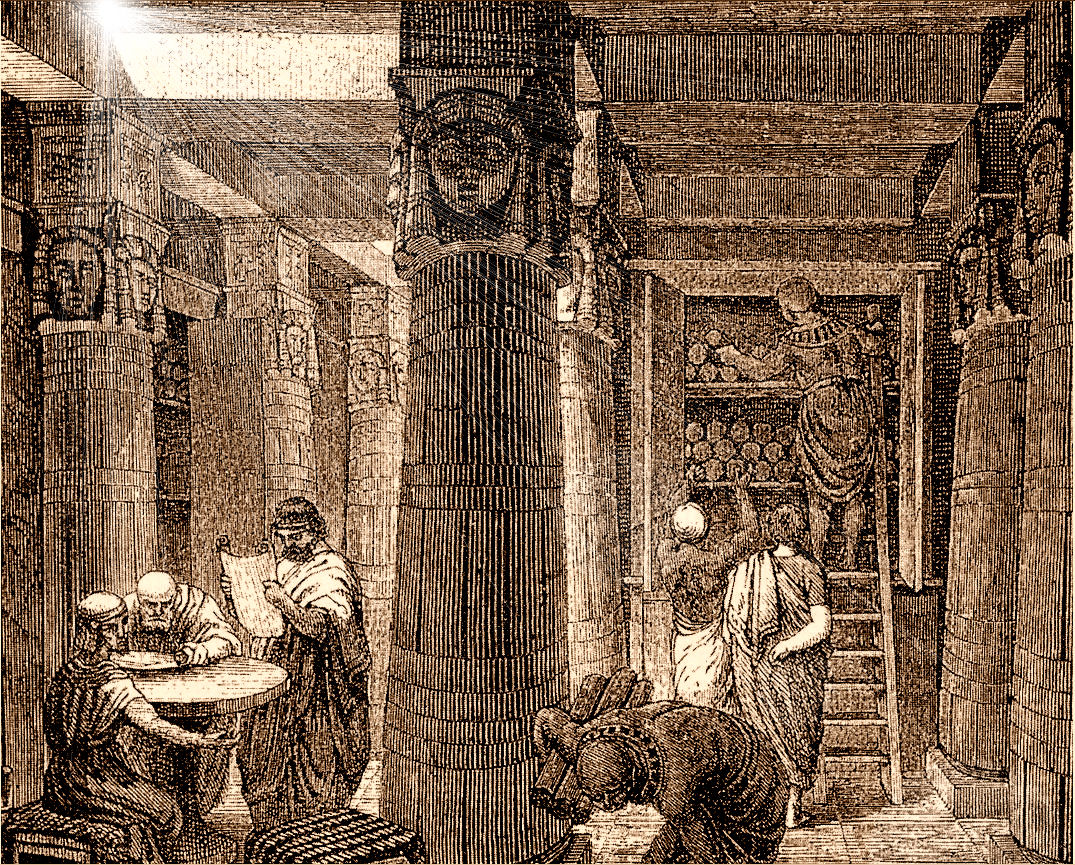
Beyond Lost Knowledge: The Library of Alexandria and the Fragility of Civilisation
Would preserved knowledge have changed history? A study of intellectual continuity, institutions and cross-cultural exchange.
Natural Simplicity & Royal Privilege
How did pastoral dress allow Marie Antoinette to appear approachable, maternal and “natural”—while simultaneously revealing the privileges of the French monarchy?
Read Full Paper ↗
and dynastic identity
Pastoral simplicity was not the absence of luxury. It was a visual language through which a royal identity could appear intimate and unguarded while remaining supported by wealth, artistic convention and exclusive spaces.
Nature as a cultural ideal
Rousseau’s writing provides an illuminating parallel for the appeal of sincerity and rural life, but does not establish direct influence on the queen.
Simplicity as distinction
Muslin, straw hats, flowers and gardens suggested ease—even as refined materials, commissioning and royal access sustained visible privilege.
Images under contest
The controversy of 1783 and revolutionary satire reveal how different audiences could assign conflicting meanings to royal appearance.
Historical Images as Evidence
Selected visual works discussed in the paper: portraits, pastoral painting, architecture and revolutionary caricature.
Informal dress prompted controversy when presented as the public image of a queen.

François Boucher’s idealized countryside.

Private retreat built around royal privilege.

Revolutionary print challenges established rank.
Domestic tenderness and dynasty coexist.
Images are historical illustrations and source artworks. The Petit Trianon photograph is contextual rather than the exact Châtelet view reproduced as Figure 2 in the paper.
A Language That Changed Meaning
Selected dates discussed in Study I, from Enlightenment ideas to revolutionary visual culture.
Rousseau’s Discourse
Social inequality, comparison and the pursuit of recognition.
Julie / Émile
Nature, domestic affection, education and gender ideals.
Petit Trianon
The estate is given to Marie Antoinette.
Chemise Portrait
Vigée Le Brun’s painting sparks Salon objections.
Family & Hamlet
Wertmüller’s portrait is shown; the Queen’s Hamlet is completed in 1786.
Revolutionary Satire
Prints contest social rank and portray the queen in hostile ways.
The tension was not simply between luxury and simplicity, but between the freedom of private appearance and the demands of public royal authority.
Paraphrase of the paper’s analysis · Not a direct quotation
and civilisational continuity
Beyond Lost Knowledge: The Fragility of Civilisation
Would the survival of the Library of Alexandria have changed humanity’s future? This essay argues that knowledge alone cannot ensure progress: institutions, communication and political structures determine whether ideas can circulate and matter.
Read Full Paper ↗Artistic reconstruction: a later image, not documentary evidence of the ancient building.
From Knowledge to Civilisation
An interpretive model of the paper’s central claim—shown as a conceptual diagram, not as measured experimental data.
Four intellectual traditions
The essay presents Alexandria as a crossroads where traditions could be collected, discussed, translated and transmitted.
How ideas become influential
The preservation of a text is only the beginning. Its wider influence depends on the social world surrounding it.
The sequence is a visual synthesis of the essay’s reasoning. It does not claim a verified causal estimate of what would have happened had the ancient library survived.
What Might Have Changed?
The paper distinguishes plausible intellectual continuity from unsupported assumptions of inevitable progress.

Two Studies. One Larger Question.
Both papers examine how meaning or progress depends on the systems through which it is produced and interpreted.
Images do not have fixed meanings.
Dress, portraits and landscapes could suggest sincerity or reveal privilege, depending on their maker, audience and political context.
Ideas do not guarantee historical progress.
Preserved knowledge becomes socially consequential only under conditions that allow transmission, debate and practical use.
Read the Complete Papers
View the original PDF essays for the full analyses, figure captions, source references and methodological qualifications.
Natural Simplicity and Royal Privilege in Marie Antoinette’s Pastoral Image
By Yunfei Liu · French Enlightenment, portraiture and revolutionary visual culture.
Read Full Paper (PDF) ↗Beyond Lost Knowledge: The Library of Alexandria and the Fragility of Civilisation
Counterfactual history · Intellectual continuity, institutions and open civilisation.
Read Full Paper (PDF) ↗Image sources, attribution and usage notes
Vigée Le Brun, Marie Antoinette en gaulle (1783) · public-domain artwork/reproduction, Wikimedia Commons;
Wertmüller, Marie Antoinette and her Children (1785) · public-domain artwork, Wikimedia Commons;
Boucher, Shepherd and Shepherdess (1760) · historical artwork, Wikimedia Commons;
Petit Trianon – Façade ouest · CC BY-SA, photographer / license information at source;
Vive le roi, vive la nation (1789) · Library of Congress, no known publication restrictions;
Library of Alexandria (sepia) · Wikimedia Commons, CC BY-SA 4.0, uploader Asiatologist;
Bibliotheca Alexandrina exterior (2006) · photo by Mahmoud Saaid, CC BY 2.5, Wikimedia Commons.
External images are displayed using the original providers’ URLs and retain their attribution here. For long-term publishing reliability, upload licensed copies to your WordPress media library and replace the image URLs while preserving attribution and relevant licenses. The two PDF URLs belong to maisonabby.com.